
Back to Learn
Hardwood Floor Cleaning NYC: What Summer Humidity Does
5f17c933d3abc0d323ac1b9f
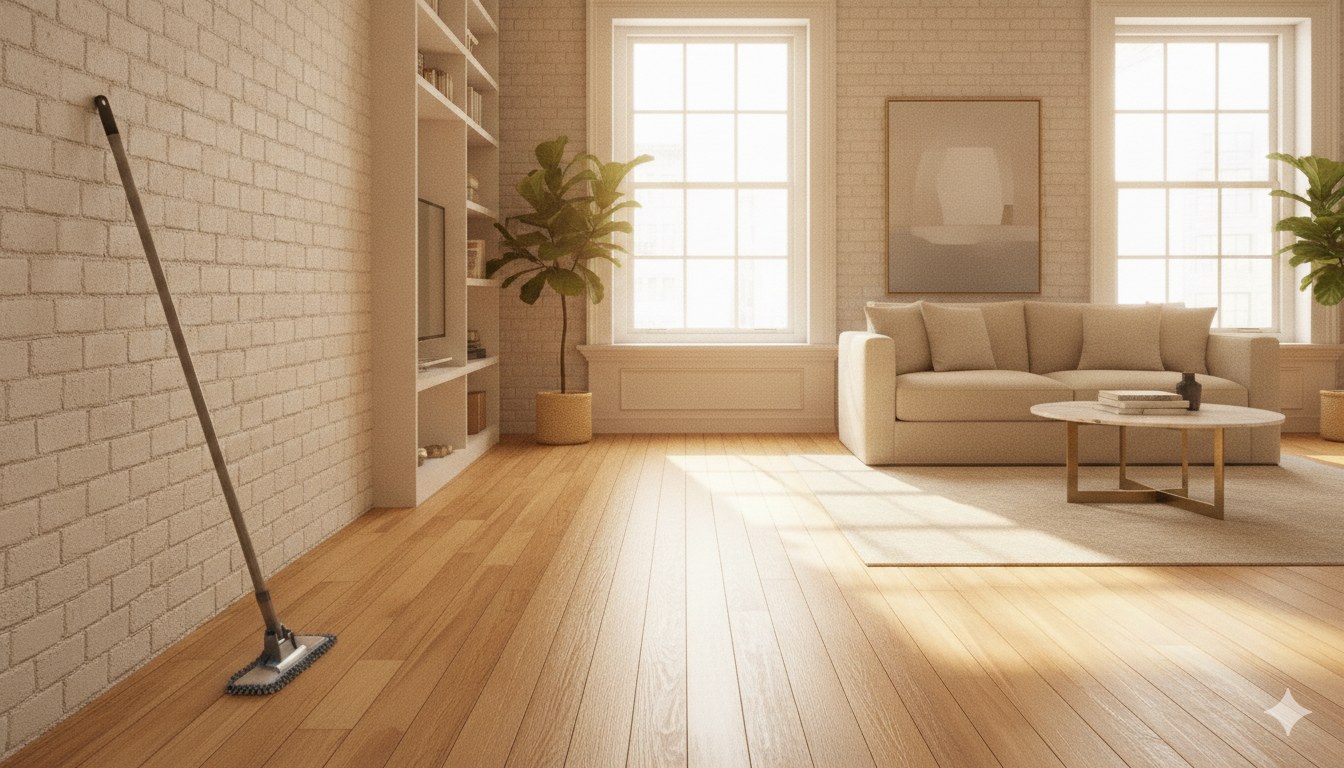
How NYC Summer Humidity Attacks Hardwood
New York City's average July relative humidity sits between 65% and 75%—high enough that wood absorbs moisture from the air even without any spills. Hardwood is hygroscopic, meaning it expands and contracts with humidity changes. In summer, that expansion is visible: boards cupping slightly at the edges, joints that were tight in January now showing small gaps that collect dust, and surface finishes that look hazy or uneven.
This isn't a sign of bad floors. Pre-war buildings especially—and most of the apartments we clean in Astoria, Crown Heights, and Inwood were built between 1900 and 1940—have original hardwood that's been expanding and contracting for a century. It handles humidity better than most people think. The problem is usually the cleaning products stacking on top of that seasonal stress.
The Oil-Soap Trap (And Why NYC Apartments Fall Into It)
The most common thing we find when we clean NYC hardwood in summer: a residue buildup from oil-based soaps. Murphy's Oil Soap is everywhere—it smells good, it's been around forever, and it feels like it's nourishing the wood. But oil soaps leave a film. In dry winter air, that film isn't very noticeable. Add summer humidity on top of it, and you get a sticky, hazy layer that acts like a magnet for dust and grime tracked in from the street.
Last month we cleaned a 1BR in Park Slope where the tenant had been using a popular oil soap for two years. The floors looked amber and cloudy despite regular mopping. When we stripped the residue with a pH-neutral cleaner and a barely-damp microfiber pad, the original light oak came back—they hadn't seen that color since they moved in. The tenant was convinced the floors had "gone bad." They hadn't. They were just buried.
What We Actually Use (And Why It Matters in Summer)
The right approach for NYC hardwood in summer comes down to three things: moisture control, neutral pH, and microfiber mechanics.
Moisture control. In summer, less water is always better. We use a spray-and-buff method with microfiber flat mops that leave floors barely damp—dried within 30 to 60 seconds. A wrung-out string mop, even a damp one, deposits too much water on a hot, humid day. That water gets trapped in the wood grain and under the finish, which is where warping starts.
Neutral pH cleaners. Alkaline cleaners (anything above pH 8) strip the finish over time. Acidic cleaners like undiluted vinegar etch it. For wood floors, you want pH 6–8. For a non-toxic option, we use a plant-based neutral cleaner paired with products from Everneat's home care shop—especially in apartments where kids or pets spend time on the floor all summer.
Microfiber mechanics. The physical action of a microfiber pad—its electrostatic charge, the way it lifts rather than pushes debris—matters more than people realize. In summer, when humidity and dust combine to create denser grime on floors, you need that lifting action rather than a cotton mop that redistributes it.
The Floor Grate Problem
Almost every NYC apartment with central HVAC or old cast-iron radiators has floor grates or registers—and in summer, those become a cleaning dead zone. Airflow pulls more particulate matter through the grate into the channel beneath. Grease from cooking collects on the metal. Humidity causes condensation inside the duct that wicks up to the floor surface around the grate edges, creating a ring of discoloration.
We clean floor grates separately on every summer deep clean: the grate comes up, gets soaked in soapy water, and the floor surface around the register gets addressed with a detail brush before we mop. If you skip this step, you end up with a clean floor and a dirty halo around every grate—which looks worse than not cleaning at all.
When to Call a Professional vs. DIY
If your floors have moderate residue buildup, sticky patches, or dullness from oil-soap use, that's addressable with a proper neutral cleaner and a couple of microfiber passes. You don't need us for that.
Where we add the most value on hardwood in summer:
- Floors that haven't been deep cleaned in two or more years, where residue has compacted across multiple seasons
- Pre-war floors with irregular gaps or soft spots that need careful moisture management
- Apartments after renovation where construction dust has worked into the grain—see our post-renovation cleaning guide
- Units being prepared for summer sublets or Airbnb turnover where floor condition directly affects guest impression
If you're in any of those situations, a professional home cleaning service can reset your floors properly and give you a baseline that's much easier to maintain through the rest of the summer.
How to Maintain NYC Hardwood Through the Summer
Once floors are clean, here's what we recommend for the June–August stretch: Keep indoor humidity between 45% and 55% using your AC and, if needed, a room dehumidifier—this is the single most impactful thing you can do for your floors, far more than any product. Sweep or vacuum (hard floor setting, suction only, no beater bar) twice a week. Spot-mop with a barely-damp microfiber as needed. Do a full damp mop pass with neutral cleaner every two to three weeks. Avoid steam mops entirely—the heat and moisture can cause irreversible damage to the finish.
READ MORE ABOUT
Want to learn more about a specific topic? Email us at [email protected]