
Back to Learn
NYC Apartment After Vacation: What Our Cleaners Always Find
5f17c933d3abc0d323ac1b9f
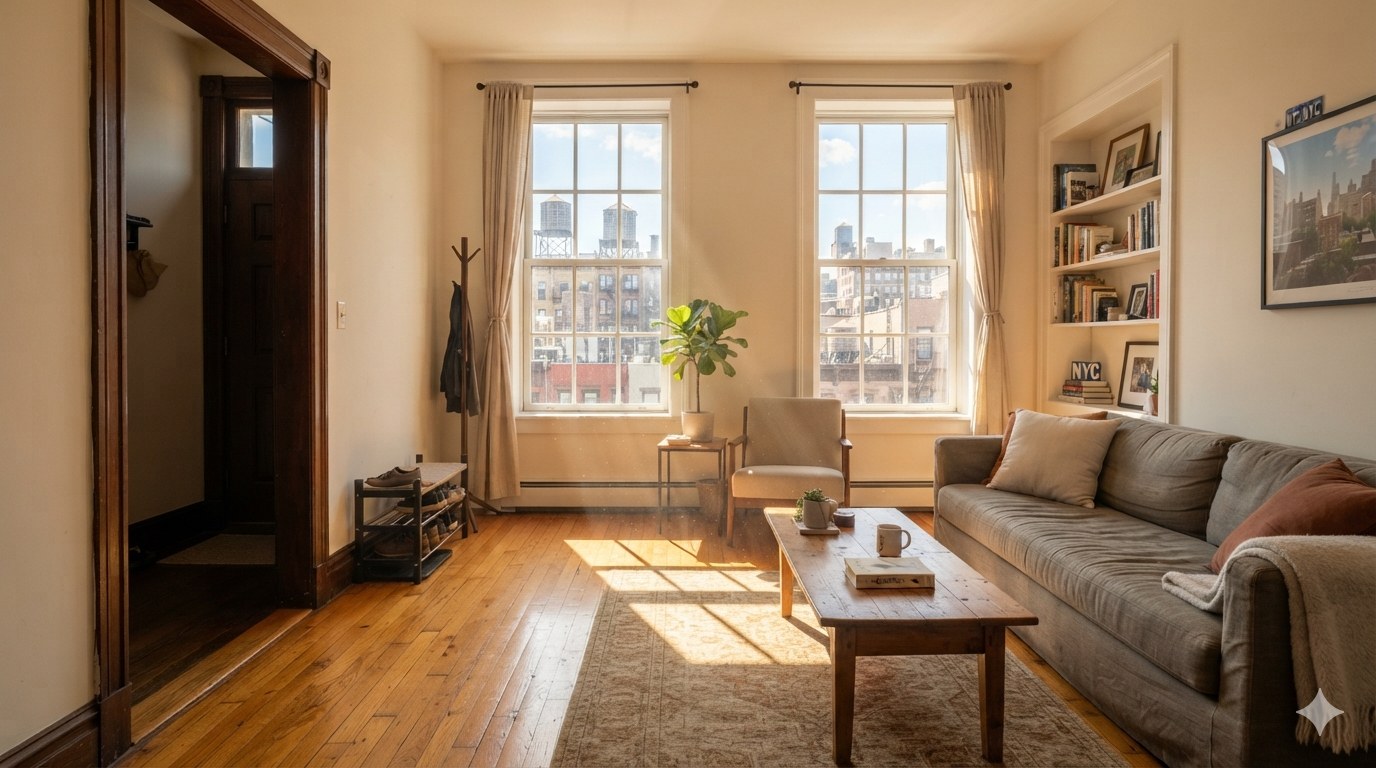
What Two Weeks of NYC Summer Does to a Closed Apartment
NYC summer is punishing when you're in it. Close up a pre-war apartment, remove the airflow, and let July humidity — often near 70–80% on sweltering days — work on every surface for two or three weeks, and the apartment transforms in ways that catch most people off guard.
The silver lining: most of what accumulates is surface-level and fixable in an afternoon. The challenge is knowing where to look, because the worst spots are rarely the obvious ones.
The Bathroom: Usually the First Sign of Trouble
This is where we start almost every post-vacation clean, and it's almost always the most revealing room. A bathroom with no ventilation running for two-plus weeks in summer develops problems fast.
The grout lines around the tub and shower are typically first. We regularly find a gray-to-pink film — not mold exactly, but Serratia marcescens, a moisture-loving bacteria that blooms on damp grout when airflow stops. It looks alarming and cleans up completely with an enzymatic cleaner, but it's a clear sign the room has been running hot and humid.
Showerheads and faucet aerators collect mineral buildup faster in NYC's hard water. The toilet bowl rim often develops a waterline ring from slow evaporation when no one flushes for weeks. And the drain — which most people skip entirely — is typically the source of whatever smell hits you first.
What we do: start by clearing the drain (the most important step), then tackle grout with a plant-based enzymatic cleaner, descale the showerhead by soaking it in diluted white vinegar for 20 minutes, and wipe the toilet rim before anything else.
According to the NYC Department of Health, mold grows faster in warm temperatures and high humidity — exactly the conditions in a closed NYC bathroom in July.
The Kitchen Looks Fine — Until You Move Things
Counters are clean. Sink is empty. Trash is out. Everything looks okay. This is the most deceptive part of a post-vacation kitchen.
What we actually find when we move things: the refrigerator drip pan — the shallow tray beneath most NYC apartment units — has collected condensation and sometimes a faint mold film. It gets zero airflow for weeks. The top of the refrigerator and the range hood vent filter collect a fine dust that's nearly invisible until you wipe it. Any dish rack or rubber drain mat left out has almost certainly gone slimy underneath.
Last week we cleaned a fourth-floor walk-up in Bed-Stuy after a 20-day absence. There was a forgotten lemon on the counter that had collapsed into itself — the sour smell had spread through the whole kitchen. One item, closed apartment, July heat: that's how fast it compounds.
The drain, again, is the thing most people skip. A kitchen P-trap with organic material in it plus three weeks of summer warmth has a smell that won't resolve with surface cleaning. Run hot water and clear the trap first.
The AC Unit: Don't Skip This
Window and mini-split units run hard all summer, and a unit that's been running continuously before your departure — then sitting idle in warm, humid conditions — accumulates moisture in the drip tray and filter.
This is what we find most consistently on July returns: a faint musty odor coming directly out of the AC unit when you first switch it back on. Sometimes it's the filter, sometimes the front grille, sometimes the drip pan. All of it points to the same cause — moisture sitting in a closed, warm environment.
Our protocol: let the unit run for 30 minutes with a window cracked on the first day back before you try to cool the apartment. This cycles out stale air before the AC seals it in. Then clean or replace the filter before the next full use — window unit filters should be washed every 3–4 weeks during peak summer use, every 2–3 weeks if the unit runs nearly continuously.
Fabrics Hold the Summer Smell
That ambient staleness when you first walk in? It's mostly coming from soft surfaces — the sofa, rugs, curtains, pillows, and mattress. These materials absorb humidity and release it slowly when the apartment is closed. Add in any dust mite activity from a heated mattress or sofa left undisturbed for weeks, and the soft furnishings are doing most of the sensory work.
A quick fix that actually works: baking soda worked into fabric surfaces, left for 30 minutes, then vacuumed off. For rugs, a full vacuum before you do anything else significantly improves the room within minutes.
The medium-term fix: 20 minutes of cross-ventilation — windows open on at least two sides of the apartment — before you start cleaning anything. This dramatically reduces the ambient humidity that fabrics are off-gassing and makes the whole cleaning process more effective.
What We Found in a Crown Heights Apartment Last Week
A client called us after 21 days away — a top-floor two-bedroom in Crown Heights. Windows shut the entire time, a July heat wave in the middle of the absence.
When our team walked in: bathroom grout had a visible pink cast (Serratia marcescens). The kitchen had a slightly open produce drawer that had allowed a container of hummus to go completely bad. The AC unit, when our cleaner switched it on to ventilate while setting up, immediately produced a burst of musty air.
None of it was catastrophic. All of it resolved in under three hours. But it's a useful picture of what 21 days of NYC July does to even a well-kept apartment — and why the order you clean in matters. We always start with ventilation and drains, work inward from wet rooms to dry, and finish with floors.
The Fastest Way to Reset Your Apartment After Vacation
If you're doing it yourself, here's the order we use:
- Open every window first. Get 15–20 minutes of real airflow before you touch anything.
- Bathroom first: drain, grout, showerhead, toilet rim. In that order.
- Kitchen: refrigerator drip pan, drain, under-appliance surfaces, stovetop. Pull the range hood filter and degrease it.
- AC unit: clean or replace the filter before you run it to cool down.
- Vacuum all fabric surfaces — sofa, rugs, mattress — before wet-wiping any hard surfaces.
- Hard floors last, so they catch everything that falls during the earlier steps.
For a one-bedroom after 10–14 days away, a thorough reset takes 2–3 hours if you know where to look. For longer absences, or if you've come back to visible mold or a refrigerator situation, booking a professional cleaning team is worth it — we typically handle a post-vacation reset in the same window, without the guesswork.
If you want to be proactive next time, our guide to prepping your NYC apartment before you leave covers what to do on the way out.
FAQ
Is it normal for my NYC apartment to smell musty after summer vacation?
Yes — very common. Closed apartments in NYC summer accumulate humidity, and soft surfaces absorb and slowly release it. Open windows for 20+ minutes and vacuum fabric surfaces, and most of the smell resolves within a few hours.
How long should I air out my apartment when I return?
Minimum 15–20 minutes with windows open before you start cleaning. If the apartment has been closed for more than two weeks in humid weather, aim for an hour of cross-ventilation.
Can mold actually grow in my empty NYC apartment?
Yes, especially in bathrooms and around AC units. The pink film in shower grout (Serratia marcescens), grout discoloration, and AC unit mustiness are the most common signs. The NYC Department of Health notes that mold grows fastest in warm temperatures with high humidity — exactly July conditions in a sealed apartment.
What's the single most important thing to clean when I return?
The drains — bathroom and kitchen. In warm, humid apartments, drain traps are the most common source of the smell people notice immediately. Clear those first, and the apartment will smell noticeably better before you've cleaned anything else.
Should I hire a cleaner after a summer vacation?
If you've been gone more than two weeks in peak summer humidity, it's worth it — especially for bathroom grout, AC units, and refrigerator drip pans. A professional post-vacation clean is faster and covers the spots most DIY approaches miss.
READ MORE ABOUT
Want to learn more about a specific topic? Email us at [email protected]