
Back to Learn
NYC Summer Sublet Cleaning: A Room-by-Room Guide
5f17c933d3abc0d323ac1b9f
Why a Summer Sublet Clean Is Different from a Regular Deep Clean
A standard cleaning keeps your home tidy while you're living in it. A pre-sublet clean is something else. You're handing over your space to a stranger and asking them to treat it well. That sets a different standard.
A subletter forms their first impression within about 60 seconds of walking in — based on smell, the kitchen countertop, and the bathroom. If any of those three aren't right, the relationship starts badly, and you may find yourself mediating disputes about cleaning standards when you get home in August.
There's also the liability angle. A well-documented pre-sublet clean protects you. If you return to a dirty apartment, you have a baseline.
The Kitchen: Where NYC Apartments Betray Themselves
The kitchen is almost always where we spend the most time on a pre-sublet job. In a small NYC apartment, the kitchen takes everything — cooking, bill-paying, late-night snacks, the occasional overflow pile.
What we consistently find
Grease residue on the cabinet fronts above the stove is the single most common issue. In a tight galley kitchen with poor ventilation — which describes most pre-war apartments in Queens and the Bronx — grease atomizes into the air and settles on every surface within four feet of the burners. It's invisible until you wipe it with a damp cloth. Then it's obvious.
Inside the oven: baked-on spills that have been there since at least Thanksgiving. Inside the refrigerator: a forgotten container from February and a produce drawer that needs to come out entirely.
What we do
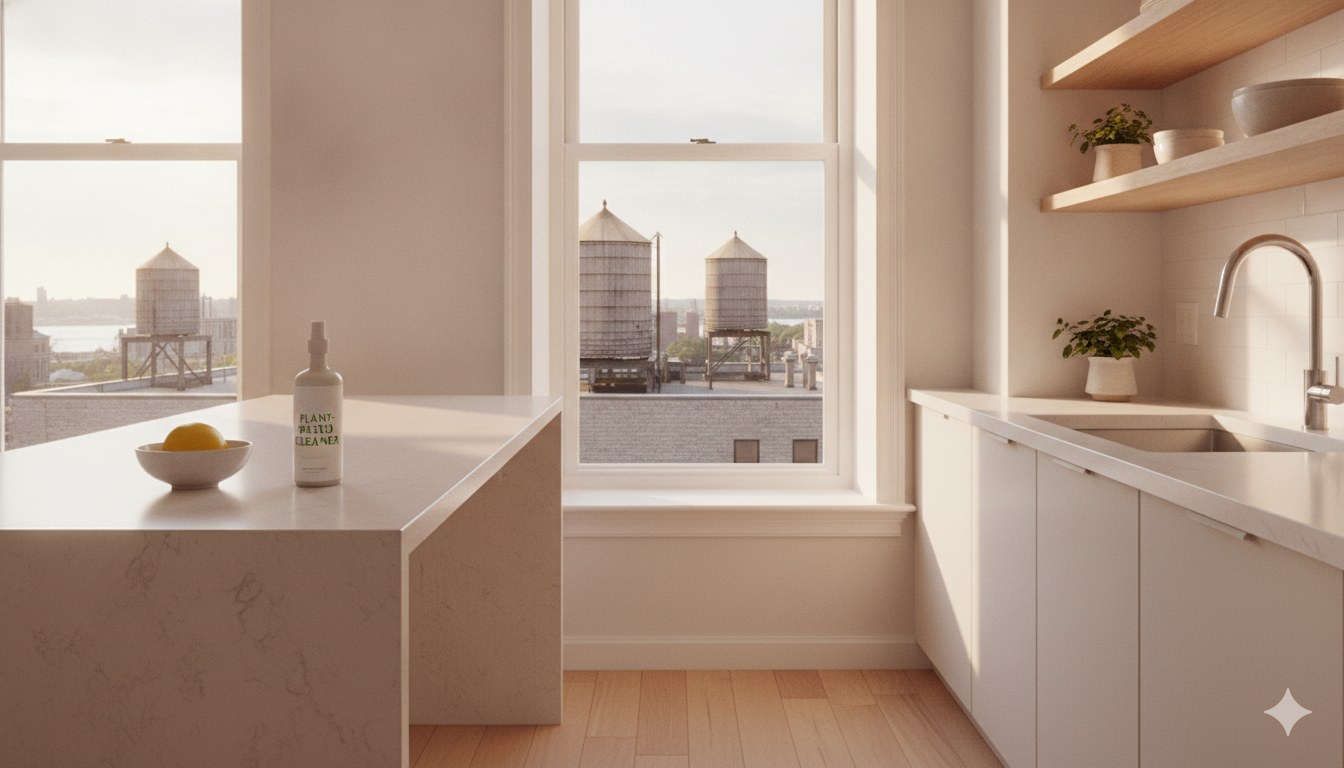
We use a plant-based degreaser on the cabinet fronts, stove surround, and hood filter. Eco-friendly degreasers have improved significantly in the last few years — our current go-to cuts through grease without the fumes that linger in an unventilated kitchen. The refrigerator gets emptied, wiped down with white vinegar solution, and dried before we leave.
The Bathroom: The Make-or-Break Room
Subletters inspect the bathroom more carefully than any other room. They're looking at grout, drain cover, toilet base, and showerhead — and they know what they're looking at.
What we consistently find
Soap scum around the tub edge, mineral deposits on the faucet (NYC tap water is famously hard), and mildew starting to develop in the grout lines near the showerhead — a consequence of June humidity arriving before anyone's noticed. The toilet base and the rim under the seat lip are almost always neglected.
What we do
We descale fixtures with a diluted citric acid solution (safe for chrome and porcelain). Grout gets a targeted scrub with a stiff brush. We pay particular attention to the drain and the bathroom vent, which in older buildings is often more decorative than functional. A clean bathroom vent reduces the humidity issue before it starts. For more on mold and humidity in NYC apartments, the NYC Department of Health has solid guidance.
The Bedroom: What Lives in the Corners
In a NYC bedroom, we're looking at baseboards, windowsills, and the area under the bed. These are the corners of a room that get bypassed during regular cleaning but are the first places a new tenant notices.
Dust accumulation behind the door, visible scuffs on the baseboard near the bed, and — in apartments with radiators — a fine layer of dust on the radiator fins and the floor directly beneath them. Window tracks in pre-war buildings often harbor years of debris. We also flag any forgotten personal items tucked under the bed or at the back of closet shelves.
The Living Room: Eyes on the Upholstery
If there's a couch, we look at the upholstery. If there's a rug, we look at what's under it. In a furnished sublet — which most summer sublets in NYC are — upholstered pieces are handed over along with the apartment.
We vacuum upholstery, lift area rugs to sweep and mop beneath them, and wipe down all surfaces including TV stands, bookshelves, and the window sill. Light switches and door handles get a disinfecting wipe — among the most touched surfaces in any apartment, and among the least frequently cleaned.
A Note on Products: Why We Use Eco-Friendly Formulas
We use non-toxic, plant-based cleaning products across all our residential jobs, and this matters especially for a sublet. The person moving in may have sensitivities to conventional cleaning chemicals. The lingering scent of bleach or synthetic fragrance in a closed apartment is not the first impression any owner wants to make.
Our preferred products use enzymes and plant-derived surfactants rather than harsh synthetic chemicals. They work. And they don't leave residue that a subletter can smell two weeks later. You can find a range of similar products at everneat.co/shop/categories/home-care if you want to keep eco-friendly supplies in the apartment for your tenant.
When to Book (and What to Do After the Subletter Leaves)
Before: Book your pre-sublet clean for two to three days before your subletter moves in — not the night before. During peak June season, our schedule fills quickly; booking two weeks ahead is ideal.
After: When your subletter leaves, do a post-sublet clean before you move back in. It resets the apartment for the fall. If you're also listing through a platform, a post-sublet clean follows the same workflow as a post-Airbnb clean — thorough and methodical.
Booking a Professional NYC Summer Sublet Clean
Our home cleaning service covers pre- and post-sublet jobs across Manhattan, Brooklyn, Queens, and the Bronx. We bring all our own equipment and products; you just need to give us a key and a time window. Questions? We're happy to walk through what a pre-sublet clean involves for your specific apartment before you book.
READ MORE ABOUT
Want to learn more about a specific topic? Email us at [email protected]